
When you own a property and need access to substantial funds, selling the property is not always the only option. Depending on your financial situation and the lender’s eligibility criteria, you may be able to use an eligible residential or commercial property as security for borrowing.
A loan against property is a secured form of financing in which an eligible property is offered as collateral to the lender. The borrower receives funds against the assessed value of the property and repays the amount, along with applicable interest and charges, according to the agreed repayment schedule.
This type of financing can be useful for individuals, self-employed professionals and business owners who require a larger amount of capital for an eligible purpose. However, because your property is used as security, the decision requires careful planning.
The purpose of this guide is to explain how this financing works, who may consider it, what lenders generally evaluate, the documents that may be required, and the important factors you should compare before making a decision.
At LoanFastBridge, the objective is to make the borrowing process easier to understand by helping customers explore their financing requirements and navigate the application process.
What Is a Loan Against Property?

A loan against property is a secured loan where an eligible immovable property is pledged as collateral against the borrowed amount.
Unlike an unsecured personal loan, the lender has security in the form of the property. Because the property provides collateral, the structure, pricing and eligibility requirements can differ from unsecured borrowing.
The property may be residential or commercial, depending on the lender’s policies and the specific product.
The amount that can potentially be borrowed is generally influenced by factors such as:
- Market and assessed value of the property
- Type and location of the property
- Applicant’s income
- Existing financial obligations
- Credit history
- Repayment capacity
- Property documentation
- Lender-specific loan-to-value requirements
- Purpose of borrowing
The lender does not simply look at the property value. The applicant’s financial profile and the legal and technical status of the property are also important.
How Does Loan Against Property Work?
The basic concept is straightforward.
Suppose you own an eligible property and need funds for an approved financial requirement. Instead of selling the property, you may approach a lender and apply for secured financing against it.
The lender evaluates:
- Your financial profile
- Your repayment capacity
- Your credit history
- The property’s value
- Ownership and legal documents
- The purpose of the financing
- Other applicable eligibility conditions
If the application satisfies the lender’s requirements, the lender may sanction an amount against the property.
The property remains subject to the lender’s security interest until the borrowing is repaid and the applicable closure formalities are completed.
This means the borrower should treat the financing as a serious long-term commitment.
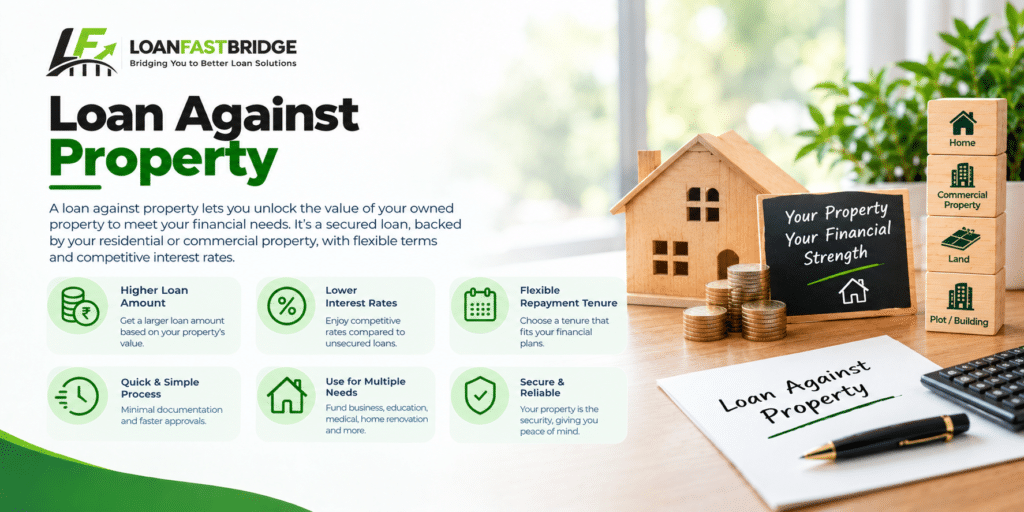
Why Do People Consider This Type of Financing?
There are several reasons an individual or business owner may consider secured borrowing against property.
Access to Larger Funding
People who own valuable property may require more funding than an unsecured loan can reasonably provide.
A secured structure may allow eligible borrowers to explore a larger financing requirement, subject to the lender’s assessment.
Potentially Longer Repayment Period
Depending on the product and lender, secured loans may offer longer repayment periods than some unsecured borrowing options.
A longer tenure can reduce the monthly instalment, although it can also increase the total interest paid over time.
Property Ownership Is Retained
One of the key attractions is that the borrower does not necessarily need to sell the property to access funds.
Instead, the property is used as security while ownership remains with the borrower, subject to the terms of the financing arrangement.
Flexible Eligible Uses
Depending on the lender and product, funds may potentially be used for purposes such as business expansion, education, medical requirements, working capital, debt consolidation or other eligible financial needs.
The permitted use should always be confirmed with the lender before applying.
Who Can Apply?
Eligibility depends on the lender and the particular loan product.
Potential applicants can include:
- Salaried individuals
- Self-employed professionals
- Business owners
- Property owners
- Certain companies or firms, where the lender’s product permits
- Other eligible borrowers
The applicant generally needs to demonstrate the ability to repay the proposed borrowing.
A property by itself does not guarantee approval.
For example, an individual may own a high-value property but still face difficulty obtaining financing if their documented income, credit profile or existing obligations do not support the requested repayment.
This is why both property value and repayment capacity matter.
What Types of Property Can Be Used?
The acceptable property type varies between lenders.
Depending on the product, an eligible property could potentially include:
- Residential property
- Commercial property
- Certain self-occupied properties
- Certain rented properties
- Other eligible immovable assets
The lender may assess factors such as location, construction, usage, title, ownership, marketability and legal status.
Properties with unclear ownership, unresolved legal disputes, incomplete documentation or certain regulatory issues may create difficulties during assessment.
Before applying, make sure your property documents are organized and that the ownership details are clear.
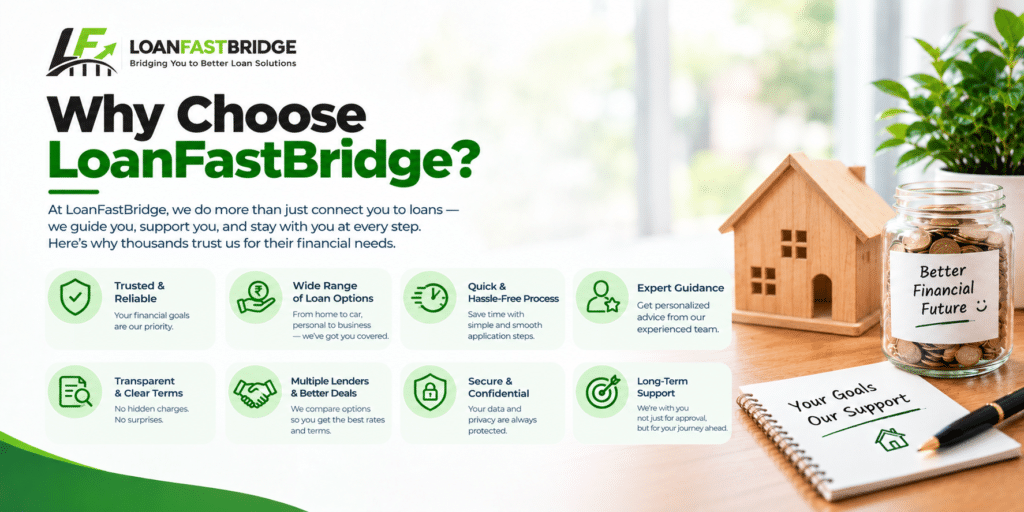
Loan Against Property Eligibility
There is no single eligibility formula that applies to every lender.
However, several common factors influence the assessment.
Income
The lender needs to determine whether your income is sufficient to service the proposed repayment.
For salaried applicants, this may involve salary slips, bank statements and employment information.
Self-employed applicants may be asked for business, income-tax and financial records.
Credit History
Your credit history provides information about previous borrowing and repayment behaviour.
A history of timely repayments can strengthen your financial profile. Existing defaults, delayed payments or excessive outstanding debt may affect the lender’s assessment.
Before applying, it is useful to review your credit report and resolve genuine errors where possible.
Existing Loans
Existing EMIs and other financial commitments reduce the amount of income available for a new repayment.
A lender may therefore evaluate your current debt obligations before deciding the appropriate loan amount.
Property Value
The lender may arrange a technical or valuation assessment to determine the property’s acceptable value for lending purposes.
The amount sanctioned is not necessarily equal to the property’s market value.
Property Documentation
Clear ownership and appropriate legal documentation are essential.
The lender may conduct legal and technical due diligence before finalizing the financing.
Documents Required
The exact documentation depends on the applicant, property and lender.
Commonly requested documents may include:
Identity Documents
- PAN
- Aadhaar or other acceptable identity documentation
- Address proof
- Photographs
Income Documents
For salaried applicants:
- Salary slips
- Bank statements
- Employment details
- Form 16 or applicable income documentation
For self-employed applicants:
- Income-tax returns
- Business registration documents, where applicable
- Bank statements
- Financial statements
- Business-related documentation
Property Documents
Depending on the property and transaction, documents may include:
- Sale deed
- Title documents
- Previous ownership documents
- Property tax records
- Approved building or construction documents
- Possession-related documents
- Other papers requested by the lender
The lender may ask for additional documents during legal, technical or financial assessment.
Providing complete and accurate information can help avoid unnecessary delays.
How Much Can You Borrow?
The amount available depends on several factors.
The lender generally considers the value of the property alongside your repayment capacity and its internal lending policy.
For example, two people owning properties with similar market values may receive different loan offers because their incomes, credit profiles, existing obligations and property documentation are different.
Therefore, it is not advisable to assume that a certain percentage of the property value will automatically be sanctioned.
Your actual eligibility can only be determined after the lender completes its assessment.
Understanding Loan-to-Value
Loan-to-value, often referred to as LTV, represents the relationship between the loan amount and the value of the property considered for lending.
For example, if a lender determines that an eligible property has an assessed value of ₹1 crore and its applicable lending policy permits financing up to a certain proportion of that value, the sanctioned amount would be based on that policy.
However, LTV is only one part of the assessment.
The lender may also consider:
- Income
- Credit history
- Existing debt
- Property type
- Property location
- Legal status
- Loan purpose
- Repayment capacity
This is why property owners should avoid calculating their borrowing capacity using property value alone.
Interest Rate and Total Cost
Interest is one of the most important costs associated with secured borrowing.
The applicable rate can depend on factors such as:
- Borrower profile
- Credit history
- Income
- Property
- Loan amount
- Tenure
- Lender’s pricing policy
- Type of interest structure
Do not compare offers solely on the headline interest rate.
You should also consider processing fees, legal and technical charges, documentation charges, insurance where applicable, prepayment conditions and other costs.
The Reserve Bank of India has emphasized transparency around lending charges and the need for borrowers to receive information that helps them compare the overall cost of borrowing.
Ask the lender for a clear statement of applicable costs before accepting an offer.
Fixed vs Floating Interest Rates
Depending on the lender and product, borrowers may encounter fixed or floating interest structures.
A fixed structure can provide greater predictability for the applicable period.
A floating structure can change according to the applicable benchmark and loan terms.
Neither is automatically better for every borrower.
Before selecting an interest structure, understand:
- How the rate is determined
- When it can change
- How changes affect the EMI
- Whether the tenure can change
- Applicable switching charges
- Prepayment conditions
The effect of a rate change can be significant when the outstanding balance is large or the remaining tenure is long.
Processing Fees and Other Charges
The cost of borrowing is not limited to interest.
Depending on the lender, borrowers may encounter charges related to:
- Processing
- Legal verification
- Property valuation
- Technical inspection
- Documentation
- Account-related services
- Prepayment or foreclosure, where applicable
- Delayed payment or other contractual breaches
The exact charges vary.
RBI’s fair-practice framework emphasizes transparency in fees, charges, prepayment conditions and other material terms so borrowers can make informed comparisons.
Do not hesitate to ask for a written explanation of any fee you do not understand.
Loan Tenure and EMI Planning
Tenure determines how long you will remain responsible for repayment.
A longer tenure generally lowers the scheduled monthly instalment, but the total interest paid can be higher.
A shorter tenure generally results in a higher monthly repayment but can reduce the overall interest cost.
The right tenure should be based on your financial capacity rather than simply choosing the longest period available.
Before accepting a loan, calculate:
Monthly EMI + Existing EMIs + Regular Household Expenses + Future Financial Commitments
If the resulting financial burden leaves little room for emergencies, the borrowing amount may be too high.
What Can You Use the Funds For?
The permitted purpose varies according to the lender and product.
Depending on the applicable terms, borrowers may explore secured financing for:
Business Expansion
Business owners may need capital to expand operations, purchase equipment, increase inventory or fund other eligible requirements.
Education
Some borrowers may consider financing for higher education or other significant education-related expenses.
Medical Expenses
Large medical expenses can create financial pressure. Eligible borrowers may explore secured funding where permitted.
Debt Consolidation
In some circumstances, borrowers may consider using secured financing to reorganize multiple obligations.
This should only be considered after comparing the total cost and understanding the risks involved.
Other Personal Requirements
Certain lenders may permit funds for other legitimate purposes, subject to their product terms.
Always confirm the permitted end-use before applying.
Risks You Should Understand
The biggest difference between unsecured and secured borrowing is the collateral.
With secured borrowing, the property is pledged as security.
If the borrower fails to meet contractual repayment obligations and the matter is not resolved, the lender may have enforcement rights under applicable law and the loan agreement.
This is why you should never take this type of financing simply because a property is available as collateral.
Ask yourself:
- Can I comfortably afford the EMI?
- Will my income remain stable?
- Do I have emergency savings?
- What happens if business income falls?
- Do I already have significant debt?
- Is the purpose of borrowing financially justified?
A property can represent years of savings and wealth. It should therefore be pledged only after careful consideration.
How to Choose the Right Lender
Choosing a lender is an important part of the process.
Instead of selecting an option only because it advertises a low rate, compare the entire financing structure.
Compare Interest Rates
Look at the actual rate applicable to your profile rather than relying solely on promotional figures.
Compare Fees
Review processing, legal, technical and other applicable charges.
Compare Tenure
Calculate the impact of different repayment periods.
Review Prepayment Terms
If you expect to repay early, understand the applicable rules.
Check Documentation Requirements
Make sure you can provide the requested information and property documents.
Understand Customer Service
Good communication can make a long-term financial relationship easier to manage.
Read the Loan Agreement
Never rely entirely on verbal explanations.
The written agreement is the important document governing your relationship with the lender.
How a Loan Consultancy Can Help
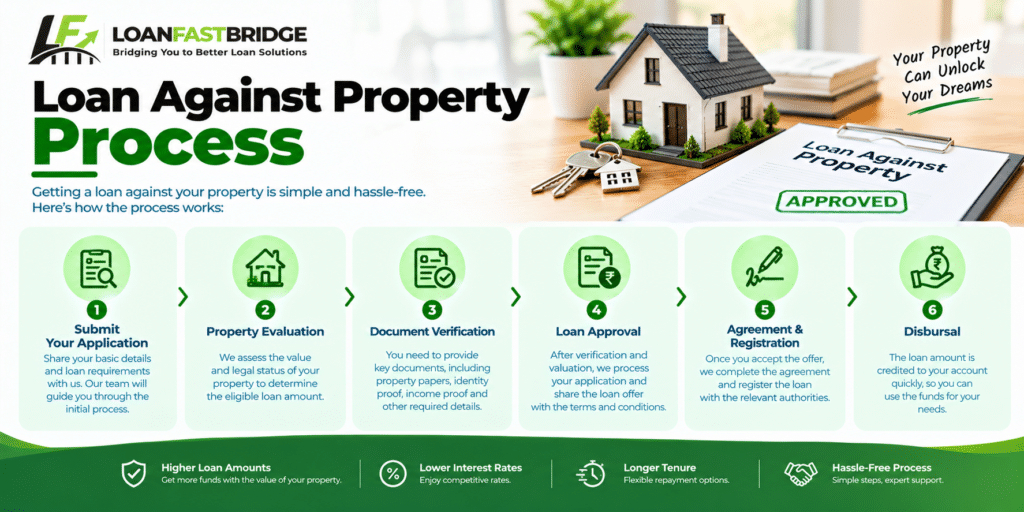
A professional consultancy can simplify a loan against property process that may otherwise feel complicated.
For someone unfamiliar with secured lending, terms such as LTV, EMI, valuation, legal verification and repayment capacity for a loan against property can be confusing.
A loan consultant can help you understand your loan against property better:
- Which type of financing may suit your requirement
- What information lenders may require
- What documents should be prepared
- How eligibility is generally assessed
- What factors influence the possible loan amount
- How different lenders may differ
- What steps follow after submitting an application
The consultant’s role should be to provide guidance and process support—not to make unrealistic promises about approval.
The final decision remains with the lender.
Loan Against Property vs Personal Loan
Both options can provide funds, but they work differently.
| Factor | Secured Property Loan | Personal Loan |
|---|---|---|
| Security | Property is generally used as collateral | Usually unsecured |
| Potential loan size | Can be substantial, subject to eligibility | Generally based heavily on income and credit profile |
| Tenure | May be longer depending on product | Often shorter, depending on lender |
| Interest | Can differ based on risk and collateral | Often higher than secured borrowing, depending on profile |
| Documentation | Property documents generally required | Primarily personal and income documents |
| Risk | Property is pledged as security | No property collateral in a typical unsecured structure |
The appropriate option depends on your financial requirement and ability to repay.
Do not choose secured borrowing simply because it may offer a larger amount.
Common Mistakes to Avoid
Borrowing More Than You Need
A larger sanction is not necessarily a better outcome.
Borrow only what is genuinely required and comfortably repayable.
Ignoring Existing Debt
Adding a large new EMI to an already stretched budget can create financial stress.
Looking Only at the Interest Rate
The total cost includes more than the advertised rate.
Not Checking Property Documents
Unclear documentation can cause delays or affect eligibility.
Accepting Verbal Promises
Always request important terms in writing.
Signing Without Reading
Read the sanction letter and final agreement carefully.
Using Property as Security Without a Repayment Plan
Your property is valuable security. Do not pledge it without a realistic plan for repayment.
Step-by-Step Application Process
Step 1: Define Your Requirement
Determine exactly how much funding you need and why.
Step 2: Review Your Finances
Calculate your income, existing obligations, expenses and available savings.
Step 3: Check Your Property Documents
Ensure ownership and property records are organized.
Step 4: Explore Lenders
Compare interest rates, fees, tenure, eligibility and service.
Step 5: Prepare Your Documents
Keep income, identity, banking and property records ready.
Step 6: Submit Your Application
Provide accurate information and the required documents.
Step 7: Financial Assessment
The lender evaluates your income, credit history, existing liabilities and repayment capacity.
Step 8: Property Valuation and Legal Review
The property may undergo technical and legal evaluation.
Step 9: Sanction
If the application meets the lender’s criteria, the applicable sanction terms are communicated.
Step 10: Documentation and Disbursement
After required formalities are completed, funds are released according to the agreed terms.
Step 11: Regular Repayment
The borrower makes scheduled payments throughout the tenure.
Responsible Borrowing: What You Should Check
Before signing up for a loan against property, create a simple checklist.
Loan amount: Is the loan against property amount enough for the intended purpose without unnecessary borrowing?
EMI: Can you comfortably pay your loan against property every month?
Interest: Do you fully understand the rate structure of your loan against property?
Tenure: Is the repayment period chosen for your loan against property appropriate?
Charges: Have all significant fees related to your loan against property been disclosed?
Property: Are the ownership and legal documents clear when applying for a loan against property?
Emergency fund: Will you still have savings after taking out your loan against property?
Future income: Can you manage the repayment of your loan against property if your income temporarily falls?
These questions can help you distinguish between what you can borrow and what you should borrow for a loan against property.
Why Choose LoanFastBridge for loan against property assistance?
At LoanFastBridge, the objective is to make the loan against property financing journey simpler and more transparent.
Customers may need funding for different reasons, through a loan against property and their financial profiles can vary significantly. For a loan against property a salaried employee, self-employed professional and business owner may have very different requirements.
LoanFastBridge focuses on understanding the customer’s requirement for a loan against property and helping them navigate the relevant financing process.
The broader loan against property services include:
- Home loans
- Personal loans
- Car loans
- Loan against property
The loan against property process can involve understanding the requirement, discussing eligibility, organizing documentation, exploring suitable options and supporting the application process.
However, final approval, pricing, loan amount and other conditions for a loan against property are always subject to the respective lender’s policies and assessment.
Frequently Asked Questions
Is a loan against property secured?
Yes. a loan against property is generally a secured form of financing where an eligible property is offered as collateral to the lender.
Can I use a residential property?
Depending on the lender’s policy for a loan against property eligible residential properties may be accepted as security.
Can commercial property be used?
Some lenders offer loan against property products against eligible commercial properties. The property’s location, construction, ownership and other factors may be assessed.
Can self-employed individuals apply?
Yes, eligible self-employed individuals can apply loan against property, subject to income, credit, property and documentation requirements.
Is approval guaranteed if I own property?
No. Property ownership alone does not guarantee approval for a loan against property. The lender also evaluates income, repayment capacity, credit history, property documents and other applicable criteria.
Can the funds be used for business purposes?
Some lenders permit eligible business-related uses under a loan against property. The permitted end-use for a loan against property depends on the product and lender.
Does a higher property value mean a higher loan?
Not necessarily. The sanctioned amount also depends on income, repayment capacity, credit profile, lender-specific LTV limits and property assessment.
Can I repay the loan early?
Early repayment may be possible, but applicable conditions and charges depend on the loan structure, lender and prevailing rules. Review the relevant loan documents before planning an early closure.
What happens after the loan is fully repaid?
The lender should complete the applicable closure process and release the property-related security documents according to the relevant rules and procedures. RBI has issued responsible-lending directions regarding the release of movable and immovable property documents after full repayment or settlement in applicable cases.
Final Thoughts
A loan against property can provide access to substantial funds without requiring the immediate sale of an eligible property. For the right borrower, it can be a useful financial tool for an important personal or business requirement.
But the availability of property as collateral should never be treated as a reason to borrow more than necessary.
Before applying, assess your income, existing obligations, credit profile and financial goals. At the same time, make sure the property’s ownership and legal documentation are in order.
When comparing lenders, look beyond the advertised interest rate. Review the complete cost, repayment structure, tenure, applicable fees, prepayment conditions and other important terms. RBI’s lending framework emphasizes transparency around charges and other material loan conditions, helping borrowers make more informed comparisons.
Most importantly, understand the risk involved. When a property is pledged as security, repayment is not simply a monthly financial responsibility—it is connected to an important asset.
At LoanFastBridge, the goal is to help make the borrowing journey more understandable through structured guidance, documentation support and assistance in exploring relevant loan options.
Whether you are a property owner looking to expand a business, manage a major personal expense or meet another eligible financial requirement, informed borrowing can help you make a more responsible decision.
Your property represents significant financial value. If you decide to borrow against it, make sure the repayment plan is equally strong.
Disclaimer: Loan availability, interest rates, loan amounts, tenure, charges, eligible property types, documentation requirements and approval are subject to the respective lender’s policies and the applicant’s profile. LoanFastBridge does not guarantee approval, a specific interest rate or a specific loan amount. Borrowers should review the lender’s Key Facts Statement, sanction terms, loan agreement and applicable charges before making a financial commitment.